Define
Translate the model objective into a clear task, data specification, and acceptance criteria.
We turn real human work into structured, customer-specified training data for robots.
See how Norda coordinates sites, contributors and capture around your model and robot training needs.
For collection partnersEarn revenue from access to your workplace.We match businesses to paid collection projects. Find out whether your sites and activities fit our clients’ needs.
01 Our principle
Norda is a custom robotics training data company for physical AI and embodied AI teams. Every program starts with the buyer’s model and what it needs to learn. Together, we define the task, environment, capture modalities, annotation schema, and acceptance criteria—from real-world human demonstrations to validated delivery. Each program is built to specification, not drawn from a pre-existing dataset, fixed sector, or sensor stack.
02 Robotics training data collection
Translate the model objective into a clear task, data specification, and acceptance criteria.
Recruit the right contributors and secure the environments the task requires.
Execute the agreed protocol with a capture setup configured for the task.
Segment and label demonstrations according to the agreed annotation schema.
Data integrity and quality checks, delivering only data that meets acceptance criteria.
Private access / Raw footage
Request a private selection of 24 egocentric clips from residential and commercial environments.
Raw footage only. No metadata or annotations.
Samples are shared privately following review of your request.
03 Multimodal robotics data
The capture stack follows the learning objective. We add equipment only when its signal justifies the cost and complexity.
Egocentric video, fixed and multi-view RGB, depth, and audio streams as required.
Pose, IMU, trajectories, force, or tactile signals where useful.
Objects, conditions, environment, operator context, and outcomes.
Task phases, event boundaries, action sequences, errors, and recoveries.
04 Real-world data collection
We pilot before scaling, coordinate contributors and sites, and configure the capture setup for each task. Managing the workflow end to end enables continuous quality control and targeted recollection when needed.
05 Robotics data quality
Task, procedure, outputs, and acceptance criteria agreed before scaling.
Task-specific equipment, calibrated where needed and time-aligned to the required outputs.
Operator training, setup checks, sample review, and rapid corrective loops.
Buyer-defined annotation schemas applied to actions, objects, transitions, errors, and outcomes.
Automated checks and human review verify each delivery against the agreed acceptance criteria.
Participant consent, data licensing, retention, transfer, and access controls defined for each program.
06 Operating experience
Norda draws on an operating network with experience running recurring real-world data collection at scale. This experience supports new programs designed from the ground up around each customer’s model, task, environment, and acceptance criteria.
Hours of first-person human-activity video delivered through prior operating programs since 2024*
Contributors recruited and managed across real-world collection programs*
Contributor and site-sourcing reach across Europe, the Middle East, North America, and Latin America
Program design · sourcing · capture · QA · annotation · batch delivery
Site access + data rights
Norda secures site-access permissions and data rights with large, often multinational companies. Across our current network, these relationships create potential reach into workforces totaling more than 68,000 employees worldwide.
Recorded volume matters only when the resulting data is relevant, structured, quality-checked, and delivered against the buyer’s specification.
// Capture versatility
From lightweight mobile kits to professional visual, audio, and motion-capture systems, Norda selects and configures equipment around the task, environment, required signals, fidelity, synchronization, and program economics.
Phone-based, body-worn, and head-mounted RGB or RGB-D systems
First-person video · depth · camera poseStereo, global-shutter, and calibrated multi-view systems
Third-person video · geometry · object and scene motionWearable, directional, binaural, and spatial-audio systems
Task audio · multichannel sound · acoustic eventsOptical, inertial, markerless, and instrumented hand-capture systems
Body and hand pose · joint motion · 6DoF trajectoriesEquipment selected to specification.
No fixed hardware or sensor stack.
*Historical figures reflect prior programs delivered by members of Norda’s current operating network. Every Norda engagement is separately scoped, contracted, and validated against the customer’s requirements.
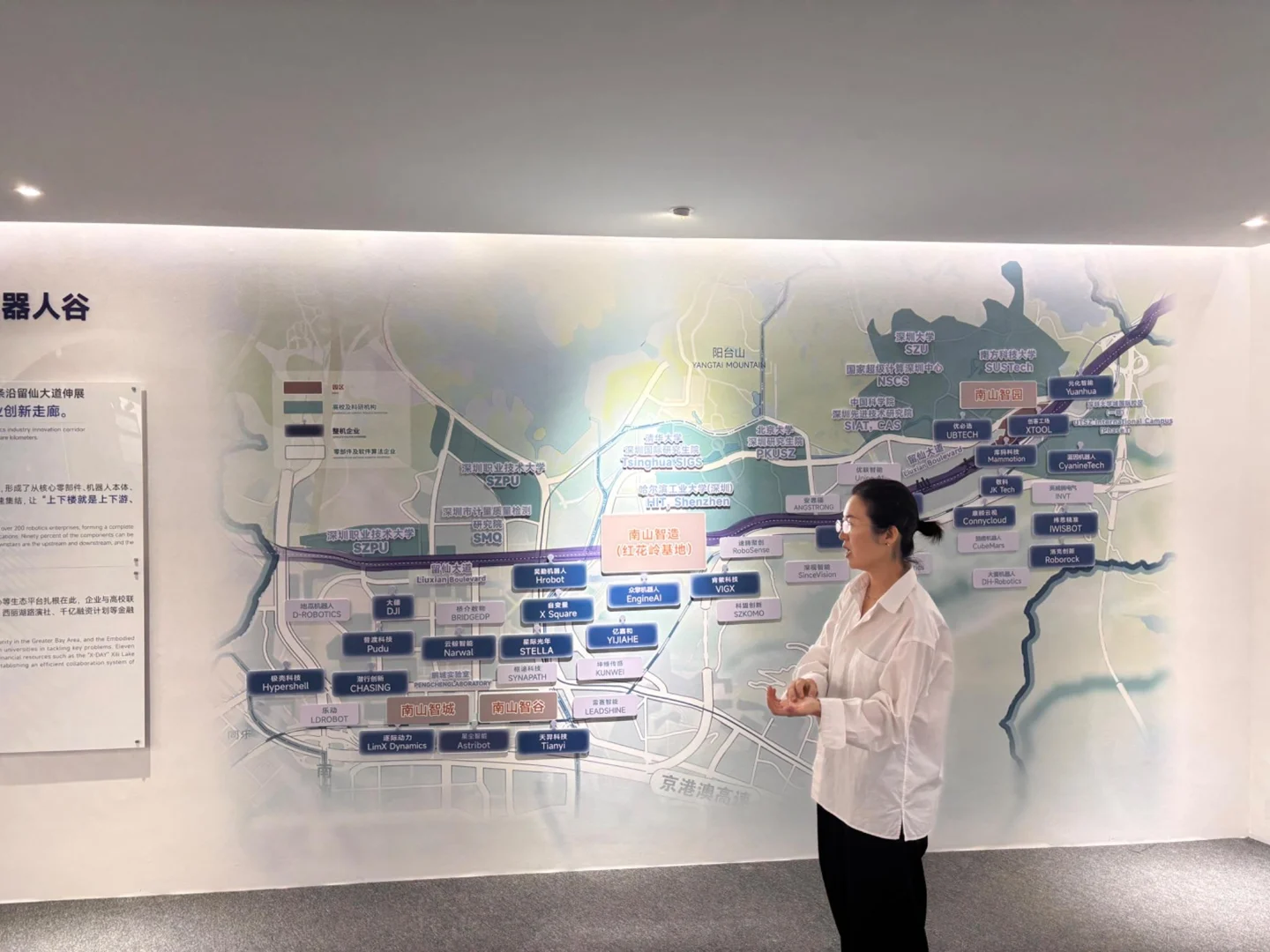
Shenzhen + Hong Kong · September 2026
Talent, training data and the environments where physical AI will have to work. Norda’s field report from 25 days in Shenzhen and Hong Kong.
Read the field report08 Start focused
Share the task, environment, training objective, and technical requirements. We will design the data program around them—from a focused pilot to recurring production.
Discuss your data needs Request sample footage